Summer hiring often feels like a race against the clock. Yet, rushing to fill roles without clear business alignment usually leads to weak hires that slow your team down. At PangeaTwo, our CONVERGENCE methodology centers every search on the actual work the role must deliver, helping you secure talent who make an impact fast. This summer surge, learn why strategic recruitment beats convenience every time—and how it sharpens your shortlist for quicker, confident decisions. Learn more about our approach.
Strategic Recruitment vs. Convenience Hiring
Finding the right candidate often feels urgent, especially in the summer. The rush to fill positions can lead to quick decisions that don’t always align with business needs. Let’s explore how strategic recruitment offers a better path.
The Pressure of Summer Hiring
Summer hiring pressures many organizations to act fast. With vacations and upcoming projects, the need to fill roles quickly becomes a priority. However, rushing to choose someone just to fill a seat can cause more harm than good. A quick decision might solve an immediate problem but can create future challenges if the hire doesn’t fit the company’s long-term goals.
Consequences of Quick Fixes
Choosing convenience over strategy in hiring often leads to mismatches. A hasty hire may not fully understand the job’s demands or the company’s culture. This can result in decreased productivity and higher turnover rates. Hiring without a clear understanding of the role’s requirements adds stress to teams and can disrupt workflow. It’s crucial to recognize that the immediate relief of filling a vacancy should not overshadow the long-term implications of a poor fit.
Realigning Hiring Priorities
To avoid these pitfalls, it’s essential to realign hiring priorities with business objectives. Focus on what the role truly needs to achieve and how this aligns with the company’s goals. By doing so, you create a foundation for finding candidates who not only meet the job requirements but also support the company’s vision. This strategic approach ensures that every hire contributes meaningfully to the organization.
Business-Aligned Hiring Advantages
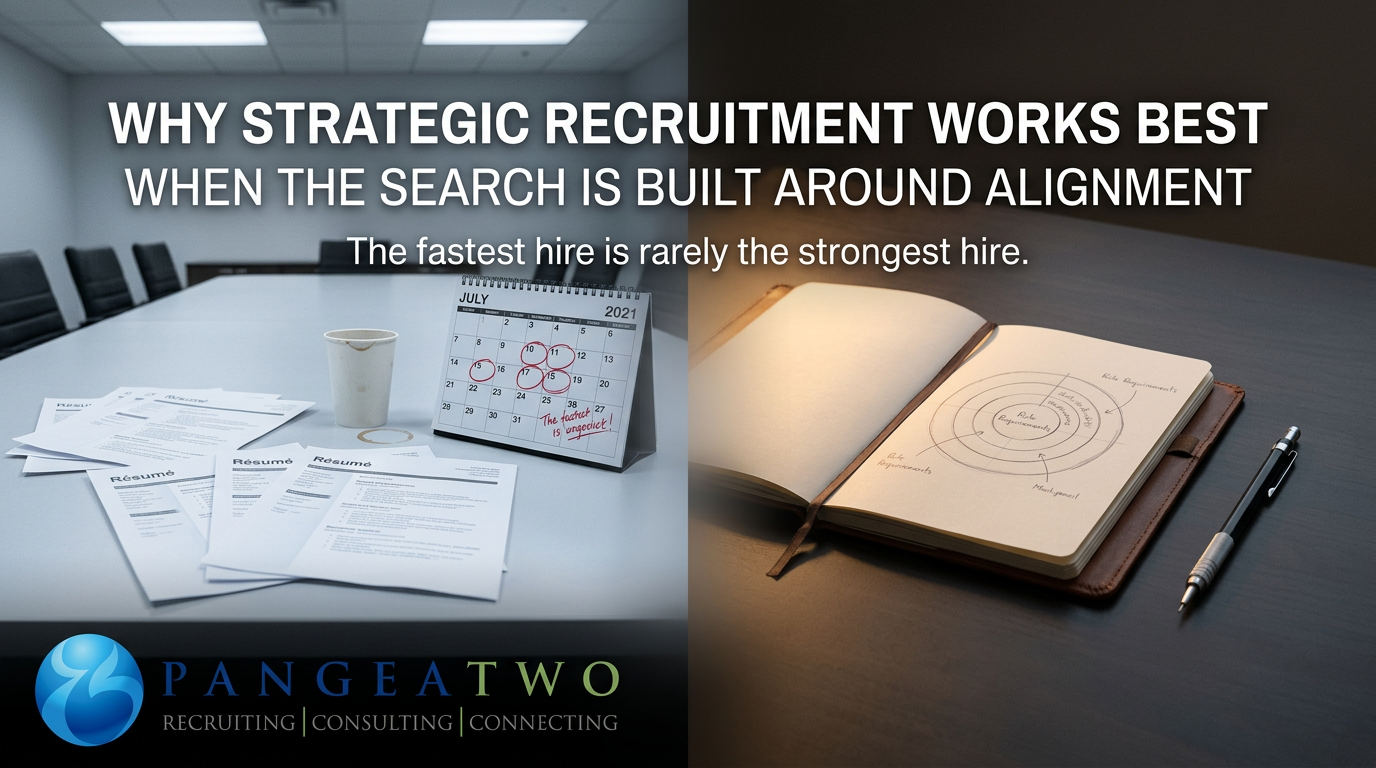
Aligning hires with business needs results in stronger, more effective teams. PangeaTwo’s CONVERGENCE methodology is key to achieving this alignment, providing a clear advantage in recruitment.
The Role of CONVERGENCE Methodology
PangeaTwo’s CONVERGENCE methodology plays a vital role in strategic recruitment. Our approach focuses on understanding the actual work that needs to be done, ensuring that each candidate is evaluated based on their ability to meet these specific demands. By centering on business needs, we help companies avoid the pitfalls of convenience-driven hiring. This method provides clarity and direction, allowing for better decision-making and impactful hires.
Creating Quality Shortlists
A well-crafted shortlist is essential for successful recruitment. By focusing on strategic needs, you can create a list of candidates who truly fit the role and the company. This involves evaluating not just skills, but also how candidates align with company values and culture. A quality shortlist minimizes the risk of turnover and maximizes the potential for a successful hire. It ensures that every candidate considered is capable of making a significant impact.
Ensuring Impactful Hires
Impactful hires are those who contribute positively from day one. By aligning recruitment with business goals, companies can ensure that new employees are ready to deliver results quickly. This alignment helps in selecting individuals who are not only qualified but also motivated to drive the organization forward. The result is a dynamic team capable of achieving and exceeding goals.
Industry-Specific Insights
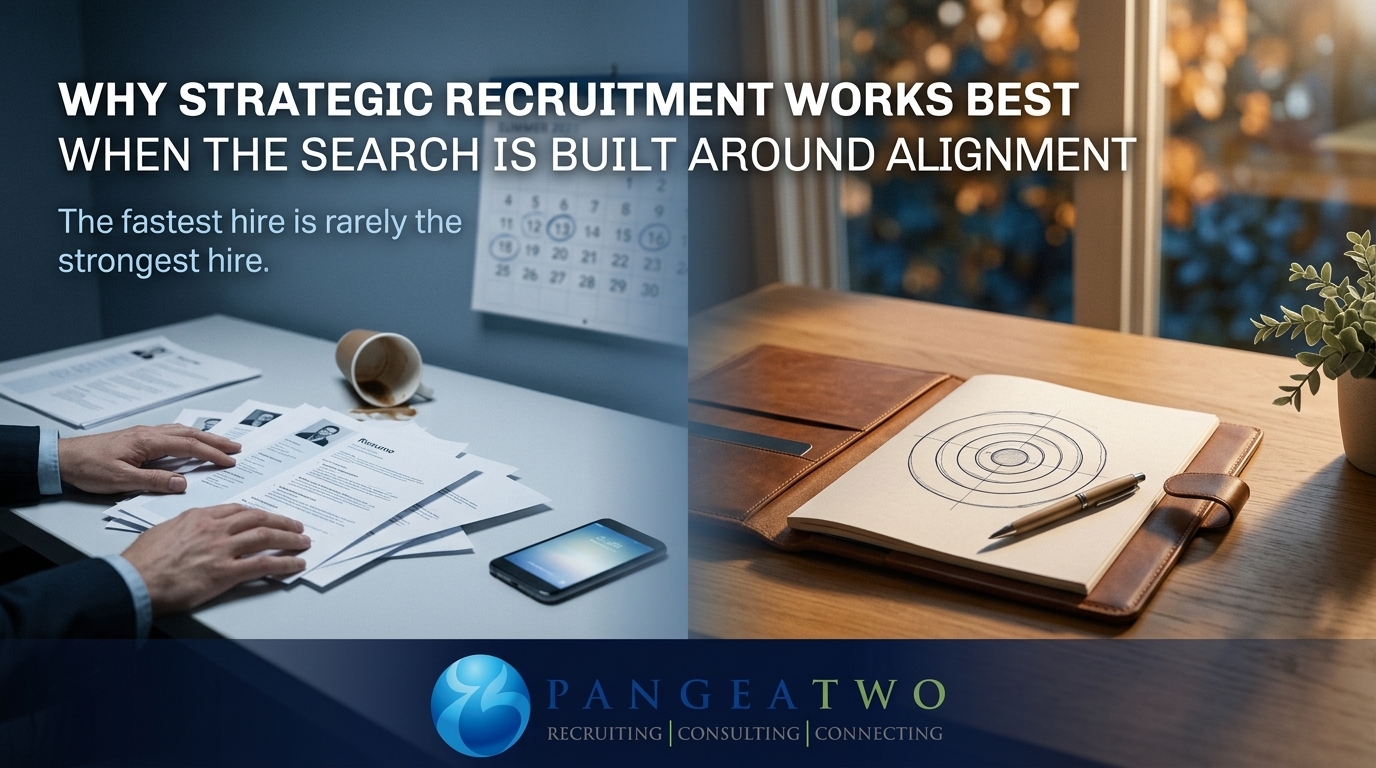
Different industries face unique challenges in recruitment. Understanding these can help tailor strategies for financial, healthcare, legal, HR, IT, and engineering sectors.
Financial and Healthcare Recruitment
In financial services and healthcare, the stakes are high. These industries require precision and expertise. Strategic recruitment in these fields means finding candidates with the right mix of skills and experience. It’s not just about qualifications but also the ability to adapt to changing regulations and technologies. A strategic approach ensures that new hires can immediately contribute to critical areas, enhancing service and efficiency.
Legal, HR, and IT Staffing
For legal, HR, and IT positions, the focus is on specialized skills and cultural fit. These roles often require expertise in niche areas, making it essential to align candidates with specific business needs. By using a targeted strategy, companies can secure talent that is both technically proficient and aligned with organizational values. This approach reduces the risk of costly hiring mistakes and enhances team cohesion.
Sales and Engineering Strategies
In sales and engineering, the ability to innovate and drive results is crucial. Candidates need to be not only technically skilled but also aligned with the company’s strategic direction. By focusing on business-aligned hiring, companies can ensure that their teams are equipped to meet market demands and drive growth. This strategic focus helps in building strong, results-oriented teams that contribute to long-term success.
Frequently Asked Questions
What is strategic recruitment?
Strategic recruitment involves aligning hiring efforts with the company’s business goals. This means understanding what the role needs to achieve and finding candidates who can meet those needs effectively.
Why is the CONVERGENCE methodology important?
The CONVERGENCE methodology is essential because it focuses on the business’s core needs. This approach ensures that recruitment efforts are aligned with strategic objectives, leading to impactful hires.
How does alignment improve hiring outcomes?
Alignment improves hiring outcomes by ensuring that candidates fit both the role and the company’s culture. This reduces turnover and increases productivity, as employees are more likely to succeed in a supportive environment.
What challenges do specific industries face in recruitment?
Industries like financial services, healthcare, legal, and IT face unique challenges due to specialized skill requirements and regulatory demands. Tailored recruitment strategies help address these issues effectively.
How can I ensure my hires are impactful?
To ensure impactful hires, focus on aligning recruitment efforts with your business needs. Evaluate candidates not only on their skills but also on their potential to contribute to your company’s long-term goals.