Hard-to-fill roles drain time and stall growth, especially when market shifts demand new skills. You need hires who hit the ground running, not just look good on paper. Strategic recruitment built on clear industry demands lets you target talent that delivers faster impact and fits your business goals—here’s how PangeaTwo’s Convergence methodology makes that possible.
Strategic Recruitment Framework
Strategic recruitment starts with identifying industry demands. By focusing on these needs first, companies can align talent more effectively.
Industry Demands First Approach
Understanding industry demands is crucial. It sets the foundation for successful recruitment. By pinpointing what’s needed in the market, you can target the right talent. This approach involves identifying the specific skills and experiences that are in demand. It ensures that your company is not just filling a position but acquiring someone who adds value. This strategy reduces the risk of hiring mismatches by starting with a clear picture of the market landscape.
Next, you align these needs with business goals. This alignment creates a more effective recruitment strategy. It ensures that the hires you make are not only qualified but also prepared to contribute to the overall objectives of your company.
Aligning Talent with Business Needs
Aligning talent with business needs involves more than just matching skills. It requires understanding the company’s goals and the role each position plays in achieving them. This alignment ensures that every hire contributes to the company’s success.
By mapping out the specific impacts each role should have, you can create a detailed profile of the ideal candidate. This profile goes beyond qualifications and examines how a candidate can drive business results. It involves considering the cultural fit and the potential for growth within the company. Aligning talent with business needs helps ensure long-term success. It reduces turnover and increases job satisfaction among employees.
Reducing Hiring Risk
Reducing hiring risk involves implementing strategies that ensure a good fit between the candidate and the company. This includes thorough vetting and proper onboarding processes. By focusing on reducing risk, companies can avoid costly hiring mistakes.
Risk reduction starts with a clear understanding of what the role demands. It means evaluating candidates not just on credentials but on their ability to deliver results. This approach leads to better hiring decisions and minimizes the chances of needing to replace hires. It also boosts employee retention, as new hires are more likely to fit well and feel satisfied in their roles.
Convergence Methodology Explained
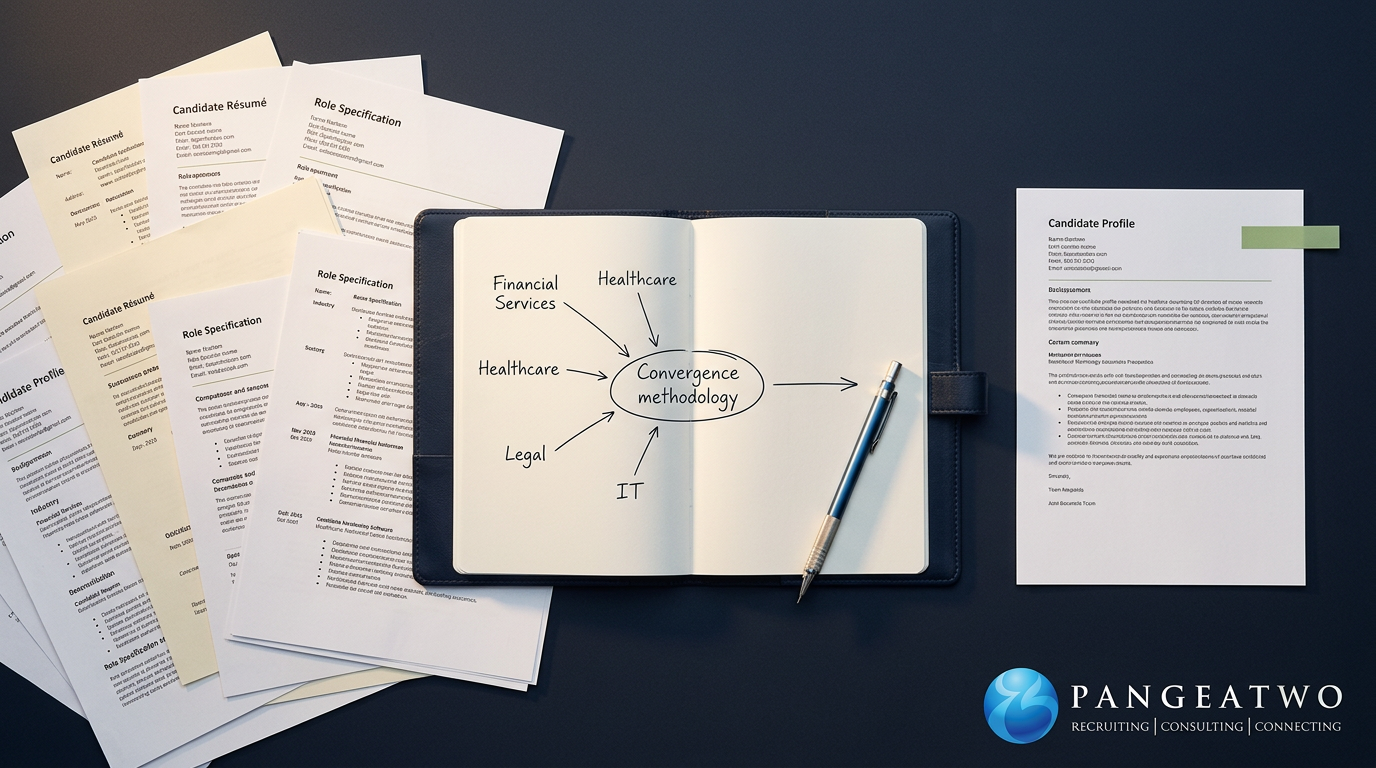
PangeaTwo’s Convergence methodology provides a comprehensive approach to recruitment. It ensures that talent aligns with industry demands and business needs.
Demand Mapping and Role Clarity
Demand mapping involves identifying the key priorities of the industry and how they translate into specific roles. This step is crucial for role clarity. It helps define what the job truly requires for success. Demand mapping starts by analyzing market trends and understanding the skills that are in short supply.
Once these are identified, it creates a blueprint for the role that guides the recruitment process. Role clarity ensures that candidates know exactly what is expected. It helps them hit the ground running. This clarity also aids in attracting candidates who are genuinely interested in and prepared for the challenges of the role.
Performance Profiling and Time-to-Productivity
Performance profiling helps in understanding what success looks like in a specific role. It goes beyond the basic job description. Time-to-productivity measures how quickly a new hire can contribute meaningfully.
By establishing clear performance profiles, companies can set realistic expectations. This leads to better training and quicker integration into the team. Performance profiling includes setting benchmarks for success and monitoring progress. Time-to-productivity is reduced when new hires are supported with the right resources and guidance. This ensures that they can perform at their best from the start.
Market Signal Scanning for Strategic Staffing
Market signal scanning involves keeping an eye on industry trends. It helps companies adjust their staffing strategies to meet future demands. This proactive approach ensures that the company remains competitive.
By regularly scanning for market signals, companies can anticipate changes and prepare accordingly. This involves understanding shifts in technology, consumer preferences, and regulatory environments. Strategic staffing based on these insights ensures that the company is ready to adapt and thrive, regardless of market changes.
Impact of Strategic Talent Alignment

Strategic talent alignment leads to significant positive outcomes. It enhances the overall effectiveness of the workforce.
Accelerating Hiring Outcomes
When recruitment is aligned with strategy, hiring outcomes improve. The process becomes more efficient, and the quality of candidates increases. This acceleration means that companies can fill roles faster with individuals who are well-suited to the tasks at hand.
Ensuring Long-term Fit
A strategic approach to recruitment ensures that hires are not just for the short term. By focusing on long-term fit, companies build a stable workforce. This stability is crucial for sustained success and reduces the costs associated with high turnover.
Enhancing Workforce Strategy
A well-aligned workforce strategy ensures that the company can meet future challenges. It involves planning for current and future needs. By aligning talent with strategy, companies ensure that they have the right people in place to drive innovation and growth.
By focusing on strategic recruitment, PangeaTwo helps businesses navigate industry challenges effectively. This approach ensures that companies are not just reacting to changes but are proactively preparing for them. Through our Convergence methodology, we guide you in building a workforce that is ready to meet today’s demands and tomorrow’s opportunities.